Order Management System
One console for orders from six channels, the riders carrying them, and the cash coming back, shipping with Lucrum POS.
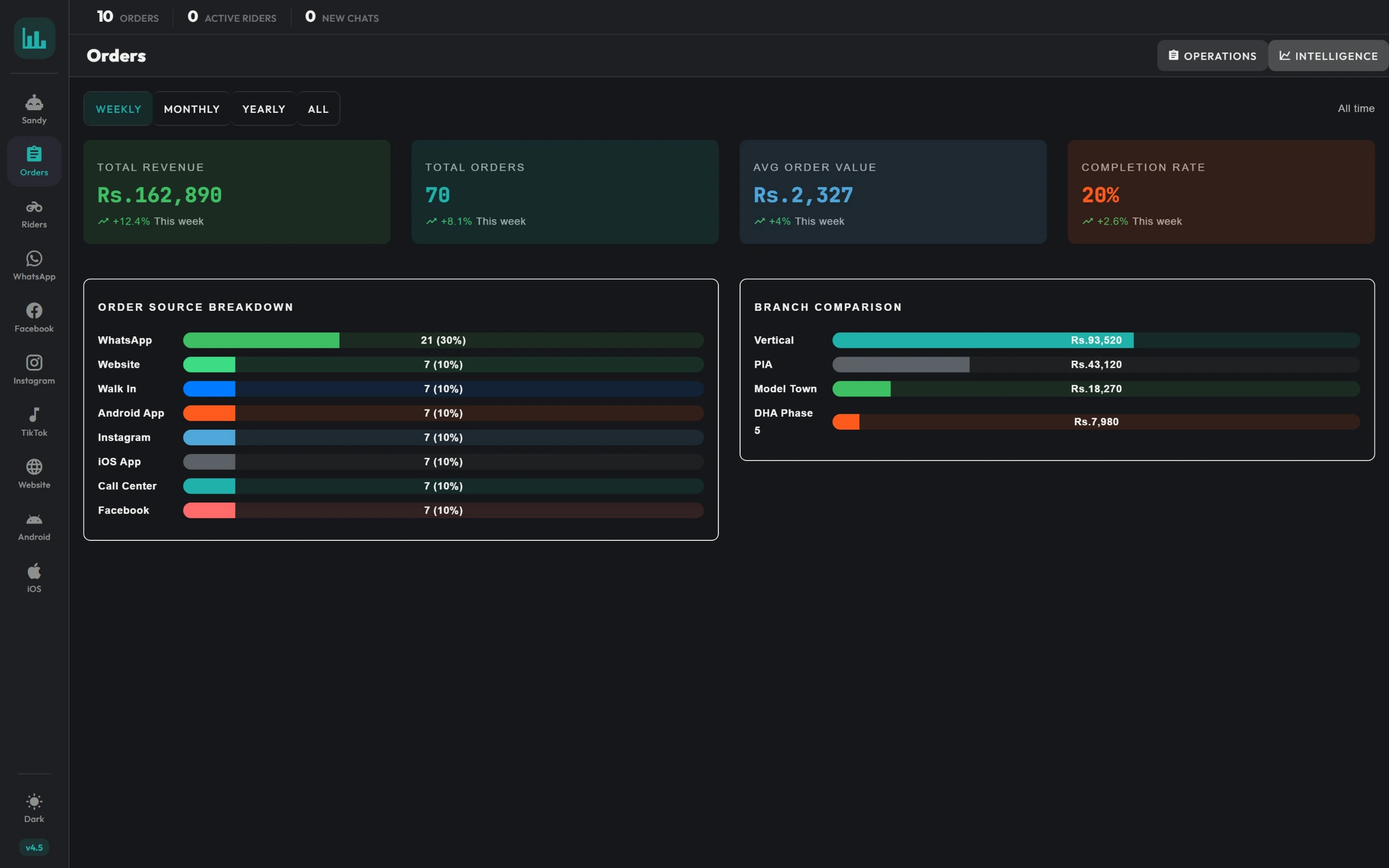
Six order channels, one screen a branch manager runs a shift from.
Ships with the point of sale that has processed more than 30,000 transactions. The same operations layer is now public as Zentallio for food and beverage.
The problem
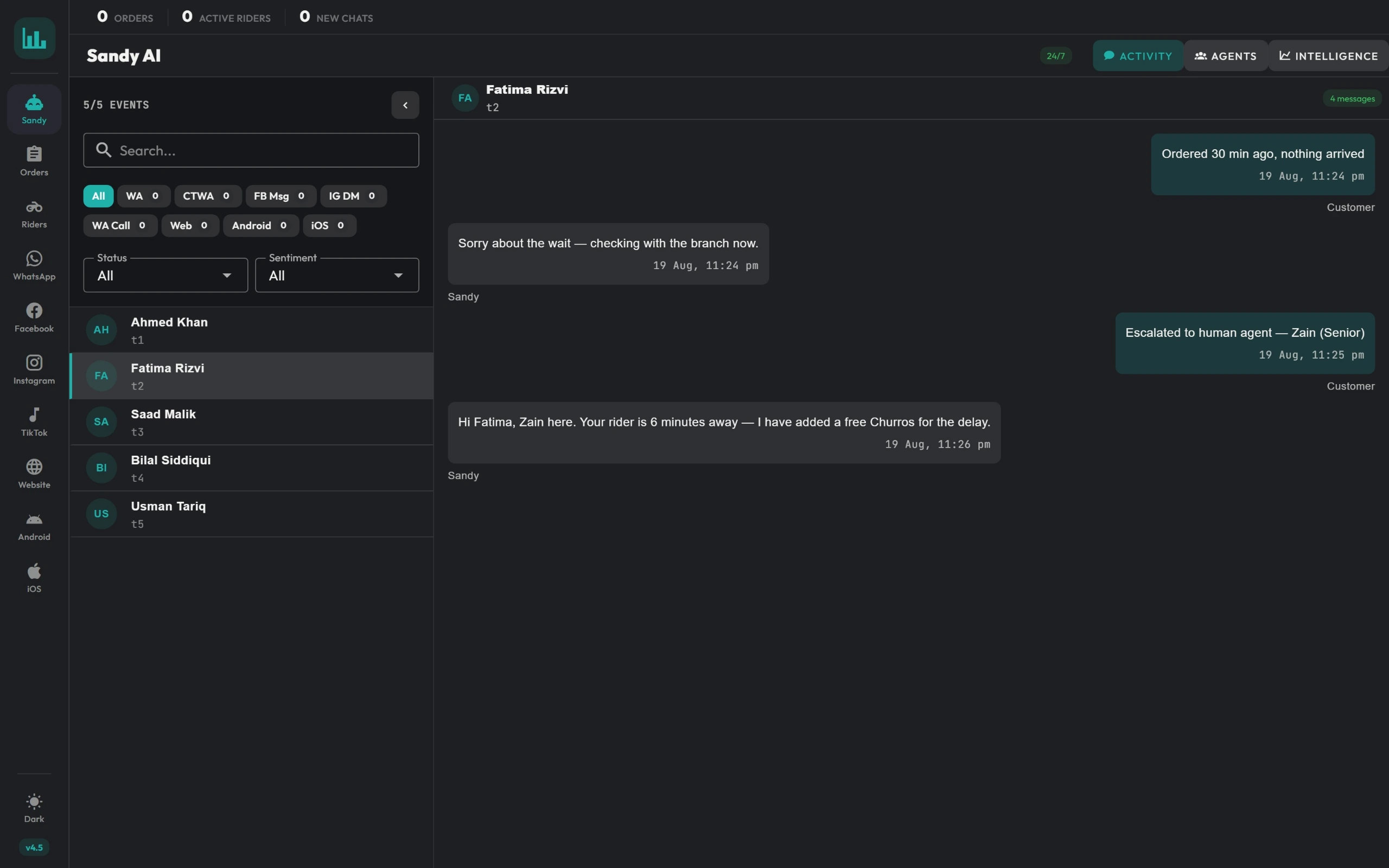
A multi-branch food business does not receive orders in one place. They arrive by WhatsApp, from the Android and iOS apps, off the website, through Instagram and Facebook, over the phone, and from someone standing at the counter.
Each one still has to reach the right kitchen, get made, get picked up by a rider who is already carrying two other bags, and come back at the end of the shift as cash that has to be counted and settled.
The dashboard exists to collapse those three into one screen a branch manager can run a shift from, and to make the money side auditable rather than remembered.
Scope and role
Sole designer on this, and the person who built the front end. The brief was five operational modules behind one rail. What it actually required was settling what the product was before anyone wrote a component, then moving that into the framework ERPNext could host without losing the detail in transit.
System architecture
Money and permissions live in ERPNext, where they are auditable and where accounting already lives. Taking an order does not: a customer waiting in a WhatsApp thread cannot wait on a document write.
Splitting them let each side be judged on its own terms, and cost us a single source of truth. Two systems can drift, which is the price of the split and worth naming rather than hiding.
What kept them honest was writing the contract first. Every interface, every endpoint response, and the ERPNext doctype fields behind them were settled before either half existed, which turned the port into implementation rather than reverse-engineering.
The operations dashboard
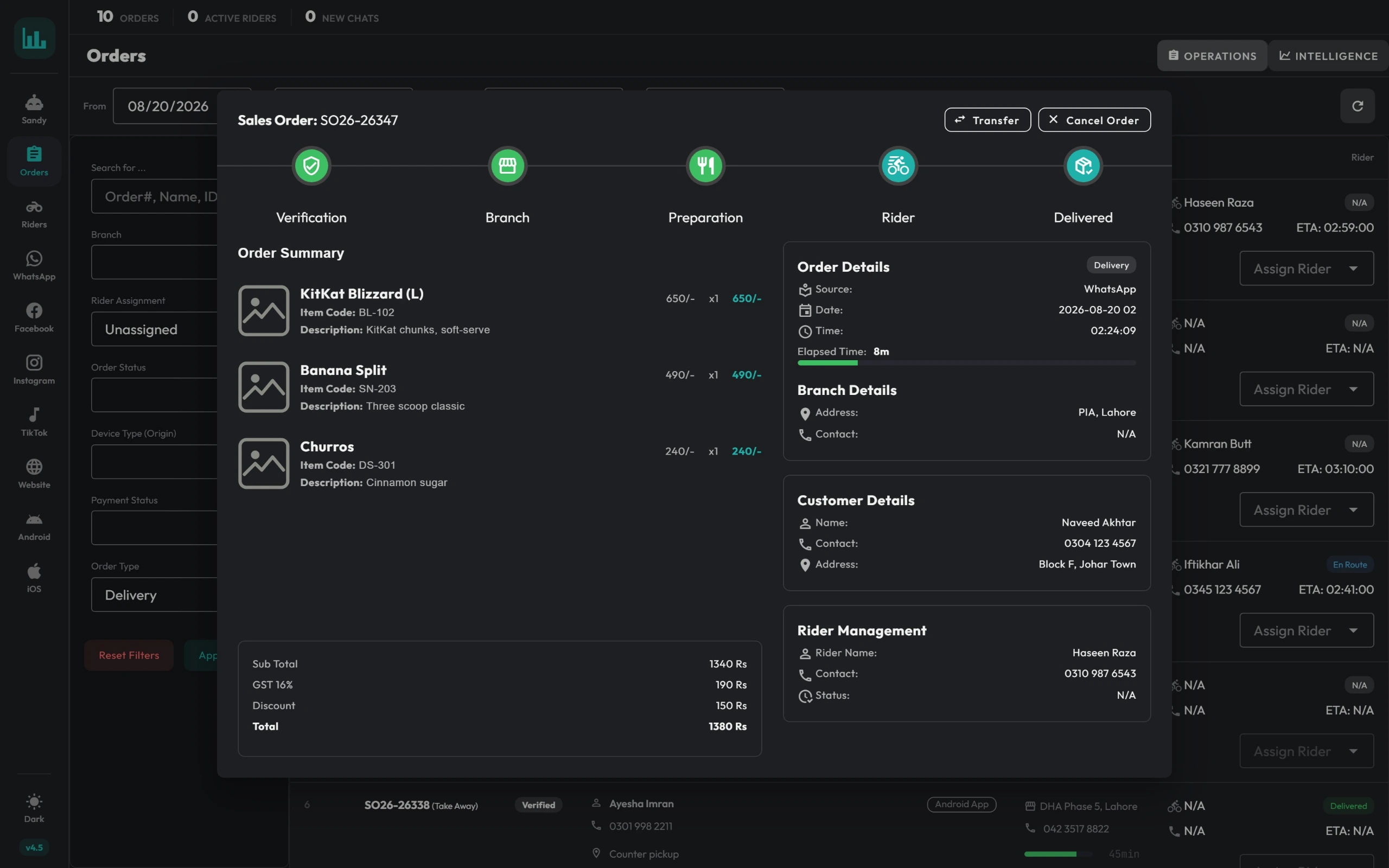
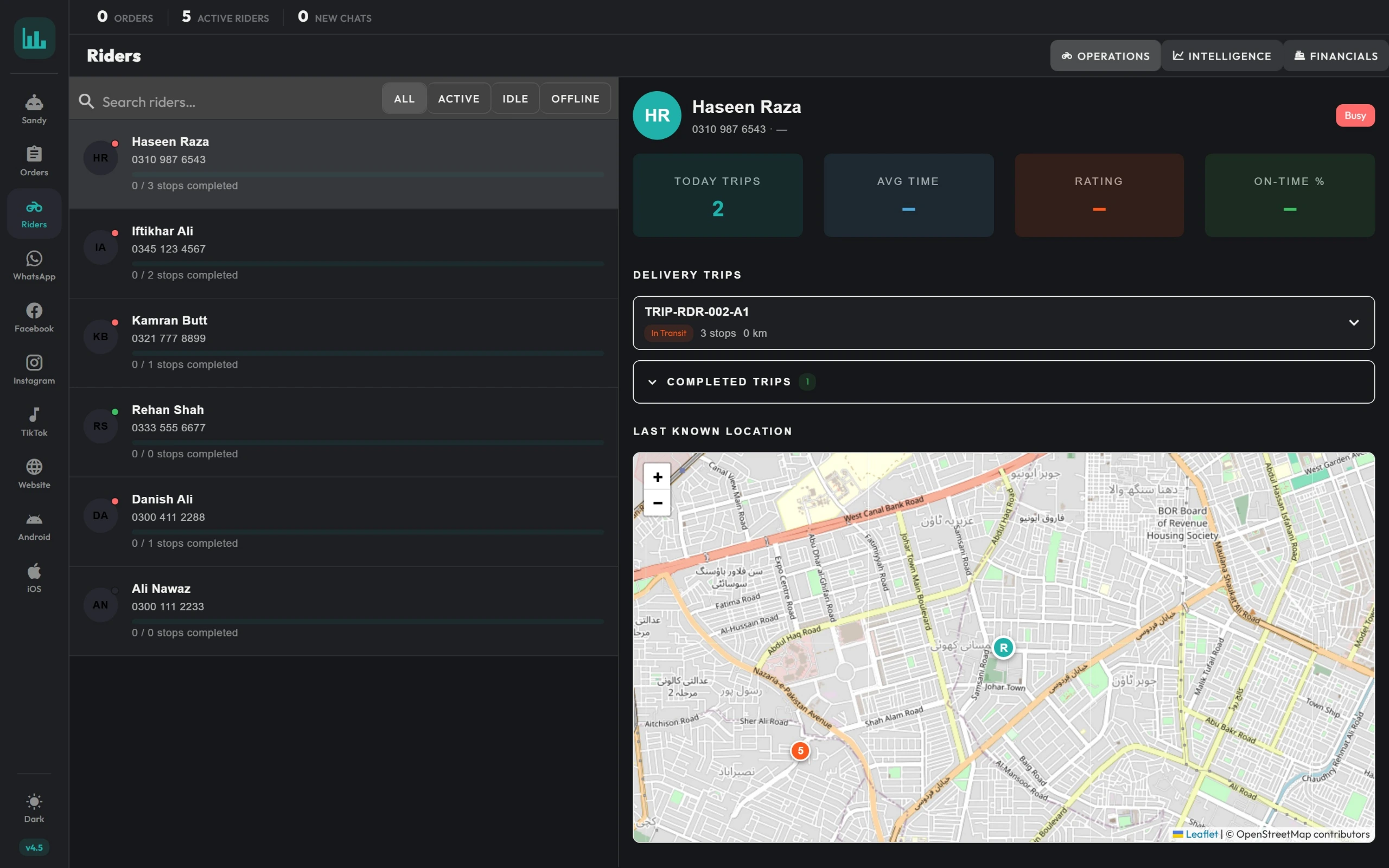
The screens below run on seeded demo data: real customer records are not shown.
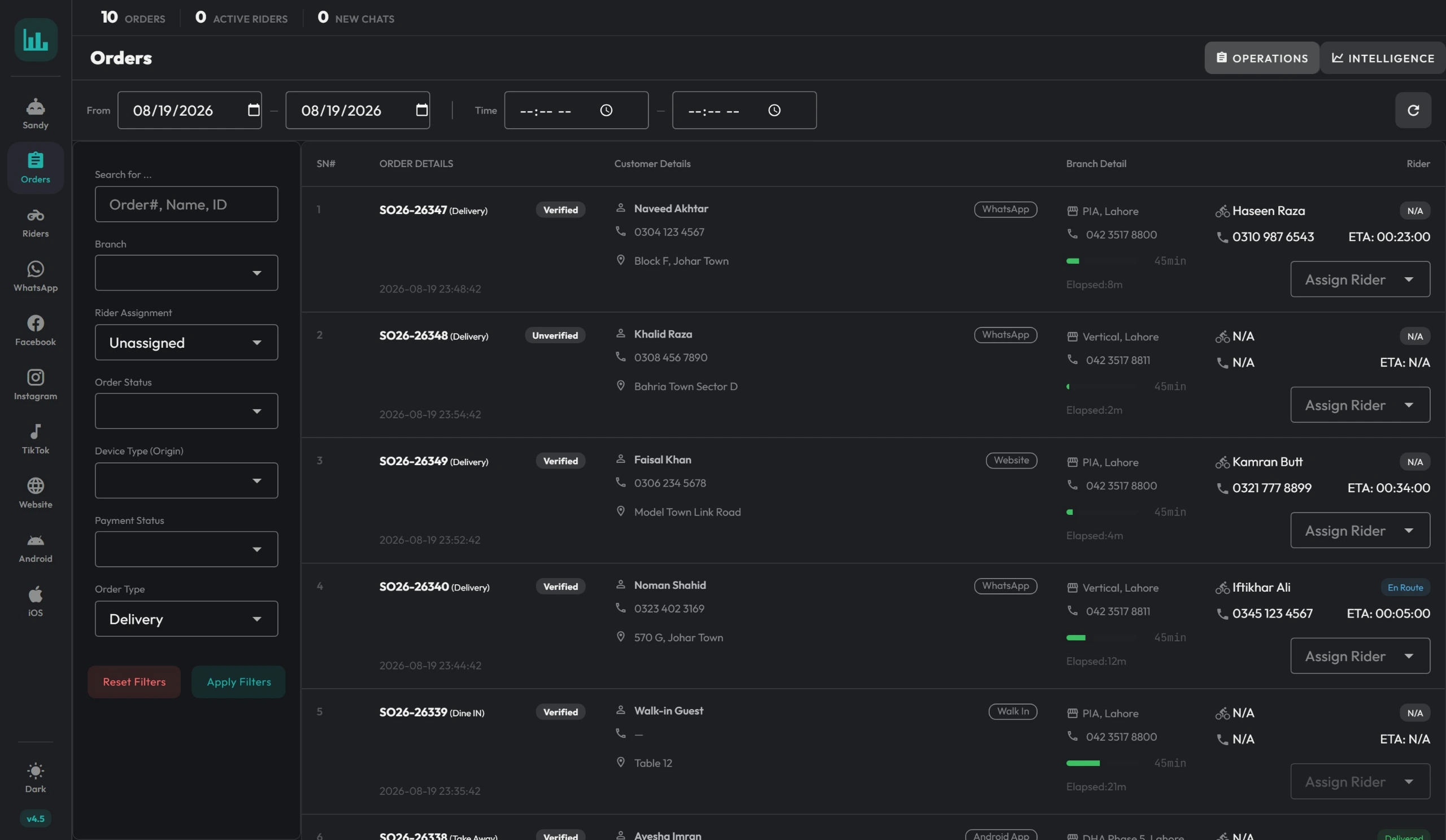
The queue is the screen a branch manager lives in. Each row carries the one thing a manager acts on: an elapsed bar counting against the delivery target, turning red before a customer has to ask.
Opening a row gives the whole order broken down to the tax, and the two actions that warrant a second thought: transferring the order to another branch, or cancelling it outright.
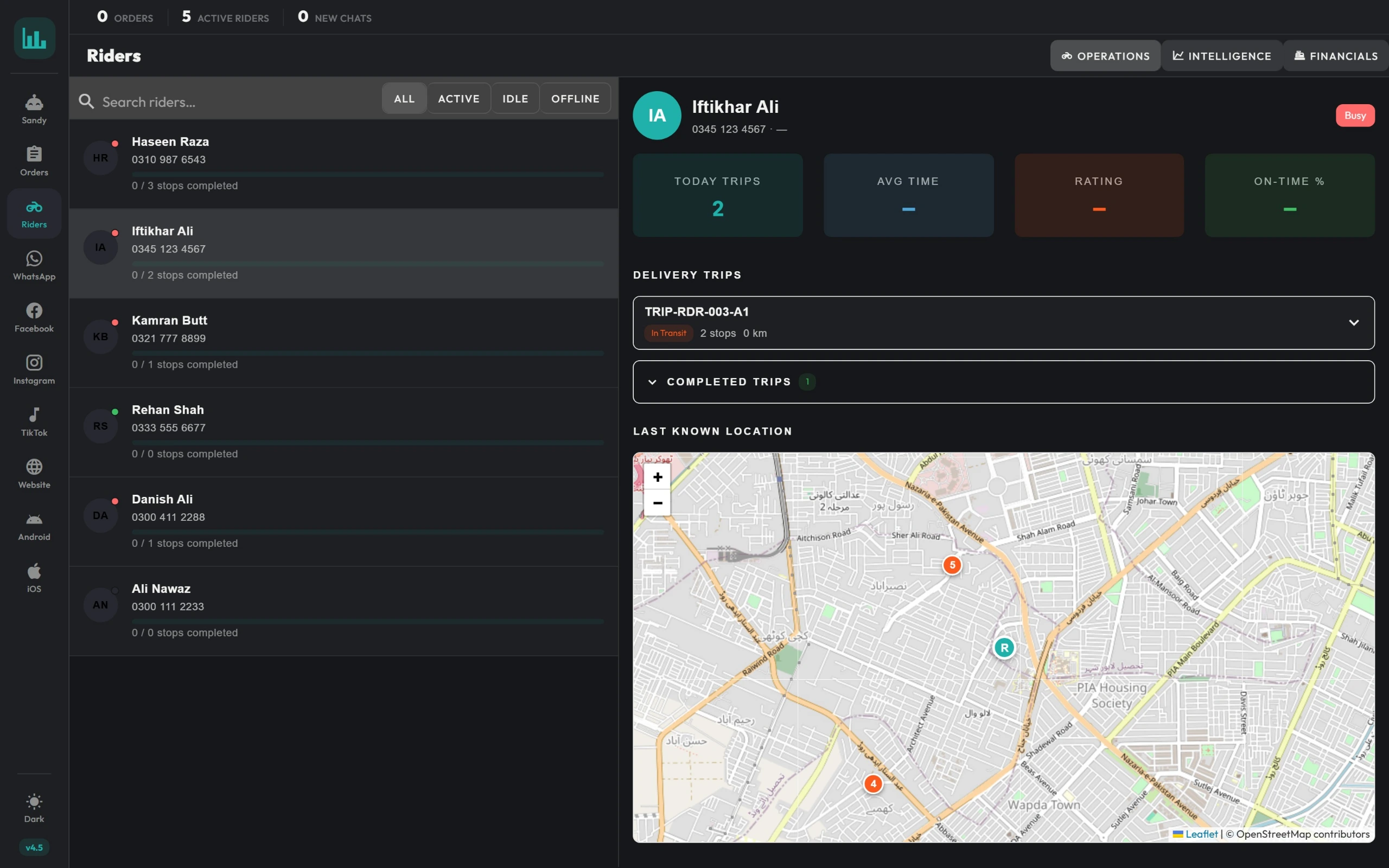
The assignment control changed most. It started as a picker (choose a rider, done) because the first version of this queue assumed one order per rider. Riders carry three, so it became a view of who is loaded, who is near, and who is idle.
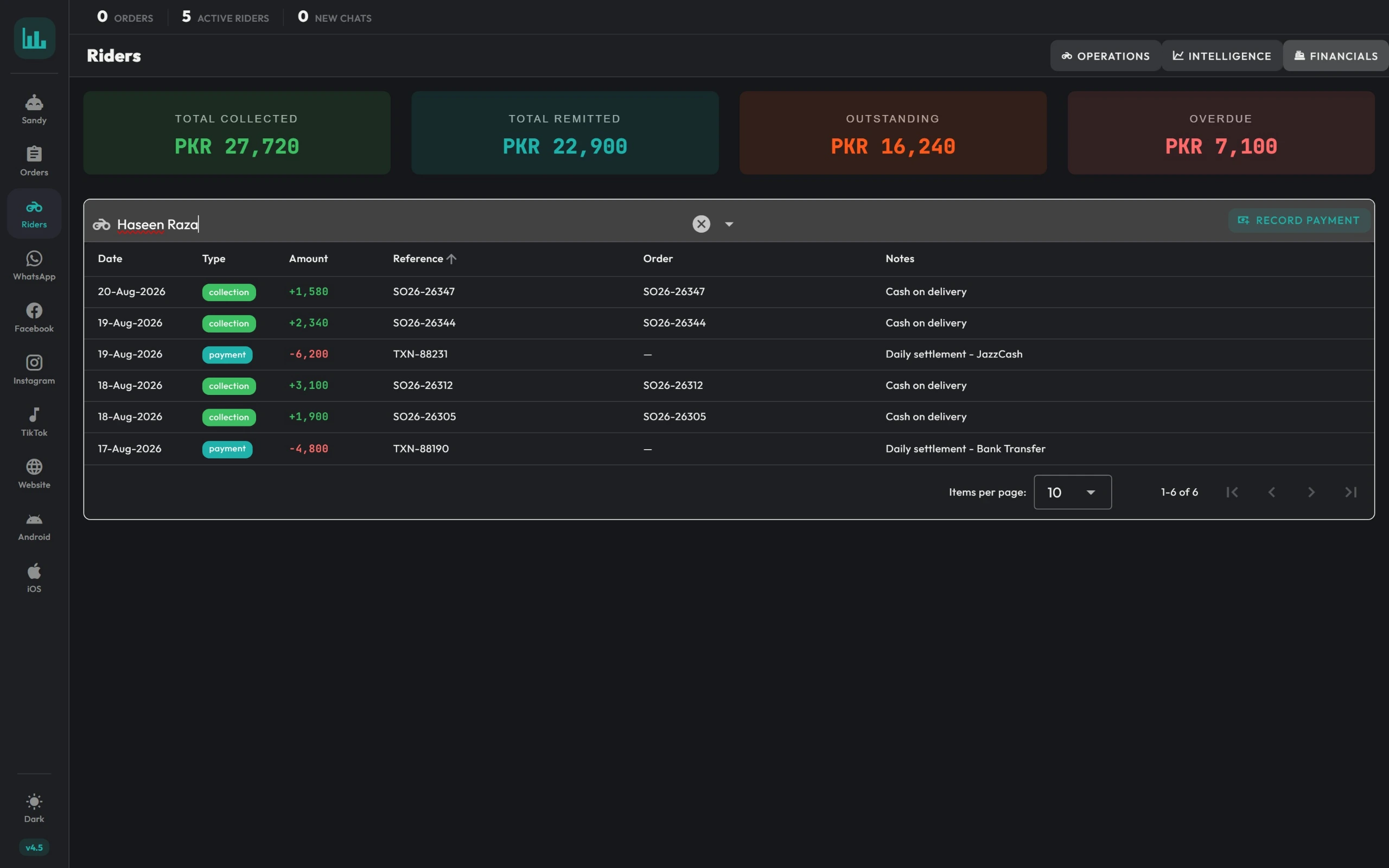
Rider financials
A rider collects cash all shift, which means they are holding the company's money for the length of a shift. The design problem is not a screen: it is making an informal, trust-based process leave a record without slowing the person down or implying they are not trusted.
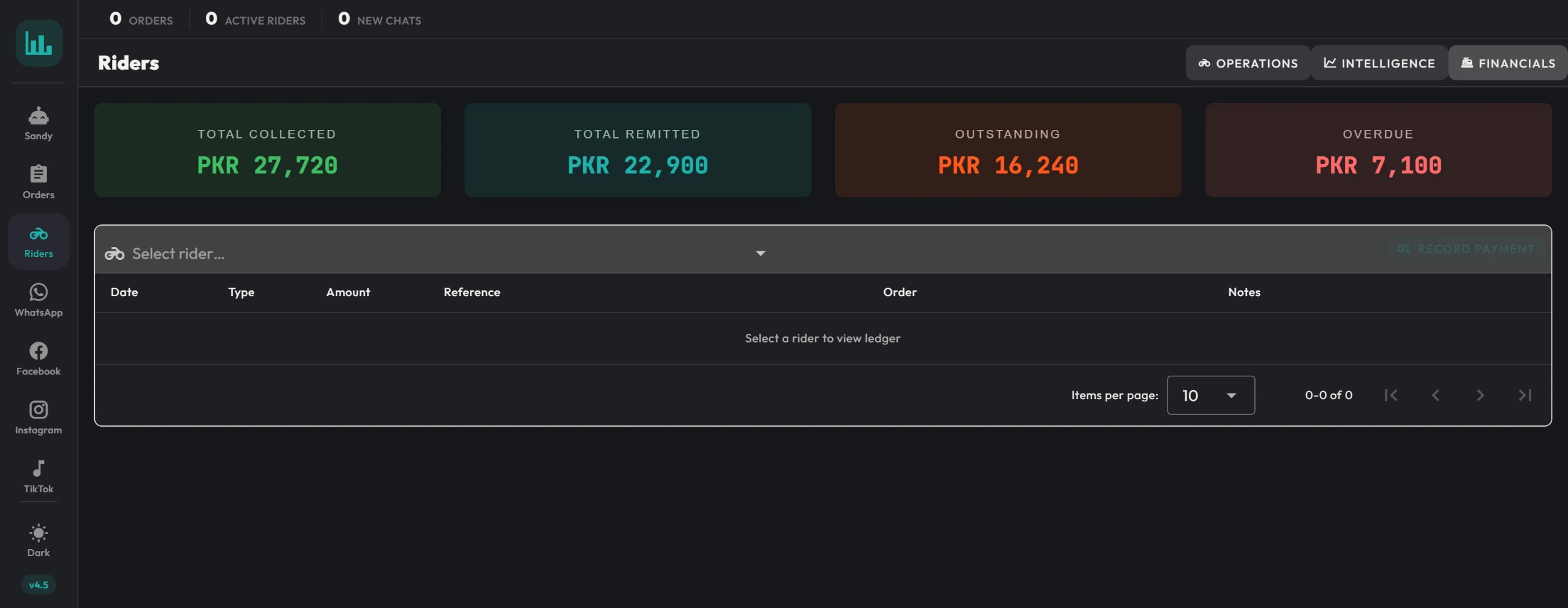
So the ledger is built from what already happens. A trip is logged, cash is collected, a settlement is recorded against a reference, and what is left outstanding is the only number that should ever start a conversation.
From prototype to production
The dashboard existed first as a single-file React prototype: just under four thousand lines, with every screen and a full set of realistic data. It was written to settle arguments, never to ship, and it did that job before a single production component existed.
The port was to Vue 3 and Vuetify inside Frappe, which is what ERPNext can host. What made that survivable was the contract: every interface, every endpoint's response shape, and the ERPNext doctype fields behind each one, written down before the port so both the Python and the Vue side had the same idea of an order.
Just under four thousand lines of prototype, written to be thrown away.
Shipping discipline
An operations dashboard fails quietly. Nobody files a bug when a number is subtly wrong: they just stop trusting the screen and go back to WhatsApp. So the release checks are built around the numbers rather than around the pixels.
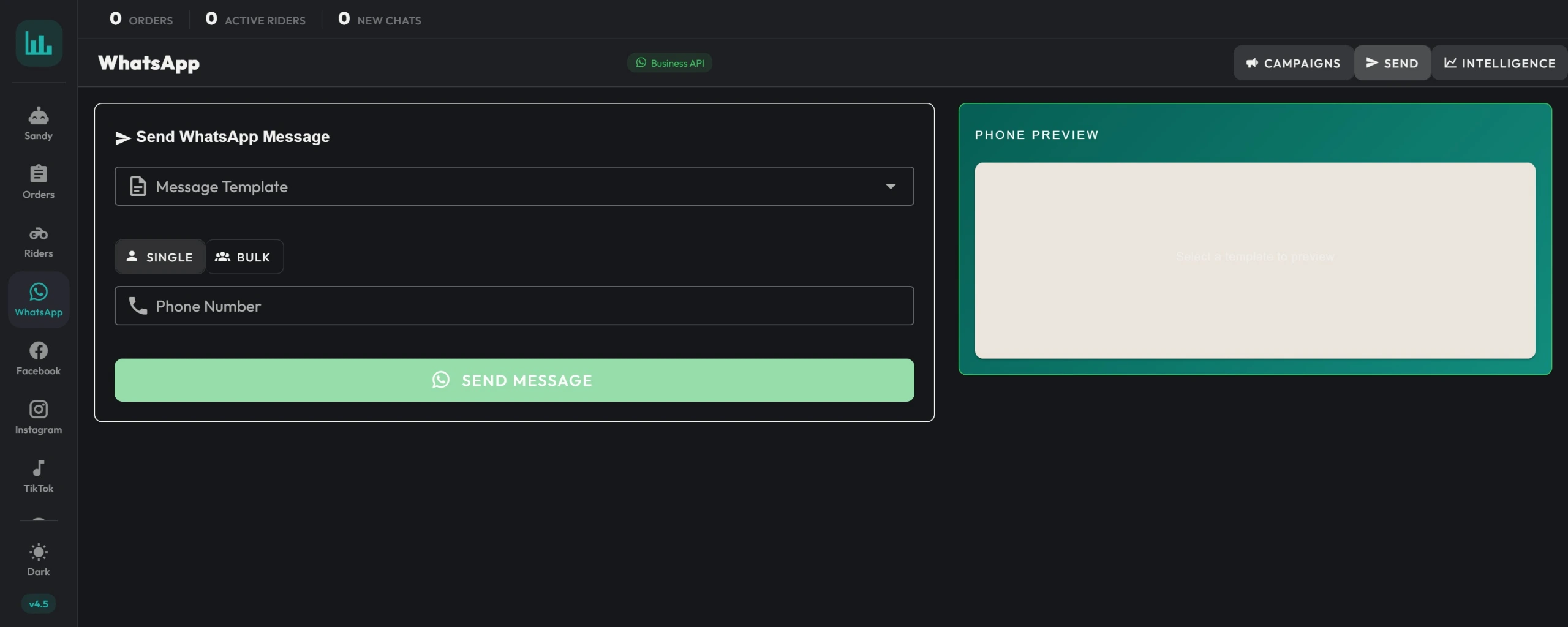
The messaging layer is the part that went furthest. It talks to Meta's Cloud API directly: fourteen endpoints covering template submission, bulk sends with rate limiting, and webhook delivery receipts.
What shipped
It ships with the point of sale, not on its own.
The dashboard is not a standalone product a customer buys: it is the operations layer that arrives with Lucrum POS, in use across multiple national QSR chains. Every branch running that POS gets this screen. The same layer is now public as Zentallio for food and beverage.What I got wrong
I designed the queue around a rider carrying one order, and that was wrong: they carry three. Fixing it late meant the assignment control had to stop being a picker and start being a load decision, and every screen showing a rider had to admit they held more than one. The written contract saved the port; it did not save me from that.
Muhammad Bin Saif, Product Designer